
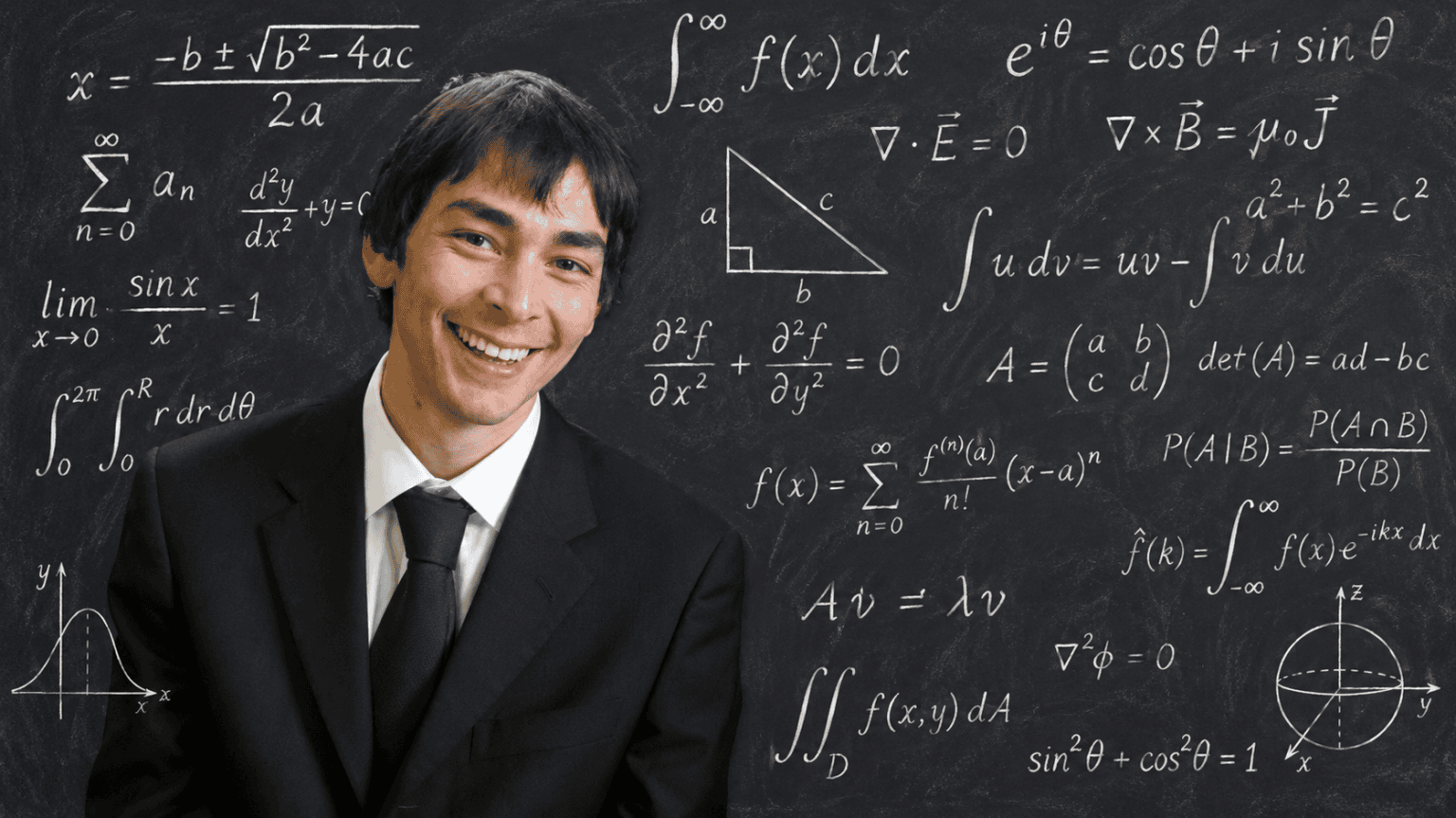
On November 20, 2026, mathematician Levent Alpöge announced that he believes he and Anthropic’s Claude AI system have produced a proof of the Riemann Hypothesis, one of mathematics’ most famous unresolved problems. Researchers have cautioned that the claim still requires independent examination. The news has also raised questions about Levent Alpöge’s parents and the background of the Turkish American scholar.
Alpöge has a long record in mathematics that predates the new announcement. He graduated with distinction from Harvard University in 2014, pursued further study and held research appointments before joining Anthropic. His work has involved number theory and related fields, giving the 2026 claim a different context from an unsupported internet prediction by an unknown person.
He grew up on Long Island in New York and has family connections to Turkey. Reports dating to his Harvard graduation describe his academic achievements and visits to relatives abroad. However, the public sources consulted do not provide a consistently verified identification of both his parents by name. It would be misleading to fill that gap with names taken from social media or unrelated people who share his surname.
The distinction between his family and his mathematical announcement is important. A person’s cultural background may be part of a biography, but it does not establish whether a complex mathematical proof is valid. That question belongs to experts who can examine the argument, its assumptions and the extensive computer-assisted material.
Who Are Levent Alpöge’s Mother and Father?
Reliable reporting identifies Alpöge as a Turkish American mathematician raised on Long Island. Turkish-language profiles published after his Harvard success in 2014 included remarks about relatives and his connection to the country. They do not, however, establish a full and authoritative biography of his mother and father that can be repeated without qualification.
His distinctive surname and academic fame have made searches for his relatives more common, especially since the November 2026 announcement. That attention is not a reason to publish unsupported family trees. A relative mentioned in an interview, such as a grandparent, should not automatically be treated as evidence of a parent’s name or occupation.
The clearest family facts are his American upbringing and Turkish roots. His academic progress also suggests long-term commitment to study, but claiming that his parents followed a specific profession or personally taught him advanced mathematics would require evidence not present in the accessible record. A careful family profile should say so plainly.
How Did Alpöge Build His Mathematical Career?
Alpöge studied mathematics and physics at Harvard and graduated in 2014 with an exceptional academic record. His achievements drew attention in the United States and Turkey, where reports celebrated a young scholar with ties to the Turkish community. He went on to pursue graduate work and advanced research, focusing on problems in number theory.
His subsequent appointments included academic research fellowships and work connected to leading universities. He became associated with the Harvard Society of Fellows, an appointment that recognizes promising scholars across disciplines. His published mathematical work and professional record can be checked independently of the latest claim.
In recent years, Alpöge began working with advanced artificial intelligence systems in mathematical research. His own website lists his work at Anthropic and academic affiliations. This is a new chapter in a career built on traditional training as well as computational tools, not a sudden switch from an unrelated profession.
Did Levent Alpöge and Claude Solve the Riemann Hypothesis?
On November 20, 2026, Alpöge released a statement saying he believed a proof had been found with Claude’s help. He described a substantial formalization effort involving millions of lines of Lean code, a language used to express and check mathematical arguments. The scale of that effort attracted immediate attention from science reporters and mathematicians.
At the time of his announcement, independent experts had not completed a review. Major science coverage emphasized that a claim of this magnitude must be checked carefully before the problem can be considered solved. The Riemann Hypothesis, formulated in the nineteenth century, concerns the distribution of prime numbers and has resisted generations of mathematical effort.
That uncertainty must remain visible in any factual article. It would be premature to state that the hypothesis has definitively been proved merely because a researcher published a confident explanation. Equally, his academic background is well documented and worthy of serious consideration. The responsible current description is that Alpöge has made a remarkable claim awaiting independent verification.
As attention turns to his life, the answer about his parents remains limited: their names and professions are not reliably confirmed in the public material reviewed, while his Long Island upbringing and Turkish heritage are established. His 2026 announcement deserves coverage on its merits, and his family deserves accuracy rather than speculation.
Leave a Reply